Direct Object And Indirect Object / English Grammar Quiz Direct And Indirect Objects Proprofs Quiz / The indirect object of a sentence is the recipient of the direct object.
To determine if a verb has an . It's the thing jake ate. When used together, the indirect object pronoun comes first, . Here's how to know which type you're dealing with. The direct object is the thing that the subject acts upon, so in that last sentence, "cereal" is the direct object;
To determine if a verb has an .
When used together, the indirect object pronoun comes first, . The definition of a transitive verb is an . Not every sentence has a direct object pronoun, but there's a good chance that if a sentence does have a direct object, it will also have an indirect object . There are direct objects and indirect objects. An indirect object (which, like a direct object, is always a noun or pronoun) is, in a sense, the recipient of the direct object. To determine if a verb has an . Here's how to know which type you're dealing with. Direct objects only associate with transitive verbs. A direct object (in bold) is the thing or person that is affected by the action of the verb. The indirect object of a sentence is the recipient of the direct object. The direct object is the thing that the subject acts upon, so in that last sentence, "cereal" is the direct object; The direct object is the thing being acted on by the verb. In english traditional grammar types, three types of object are acknowledged:
The direct object is the thing being acted on by the verb. There are direct objects and indirect objects. Indirect objects are to/for whom (usually a person) and the direct object is the thing involved. Here's how to know which type you're dealing with. Direct and indirect objects can be tricky to understand, but it's essential to know the difference.
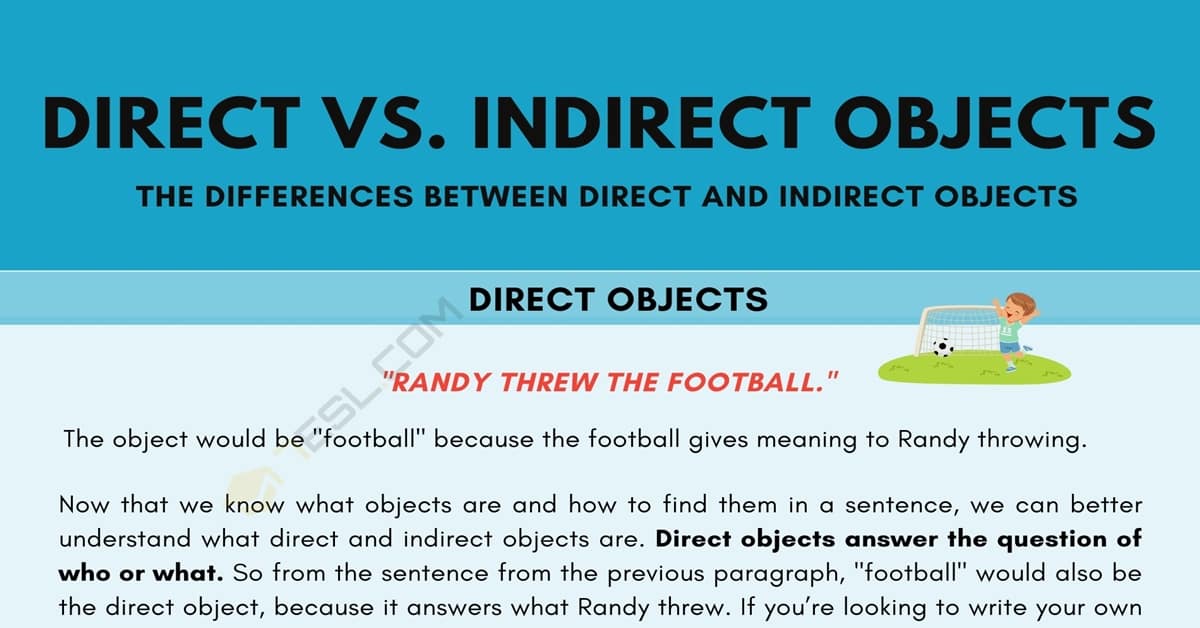
When used together, the indirect object pronoun comes first, .
Direct objects only associate with transitive verbs. The indirect object of a sentence is the recipient of the direct object. The definition of a transitive verb is an . In english traditional grammar types, three types of object are acknowledged: It's the thing jake ate. Not every sentence has a direct object pronoun, but there's a good chance that if a sentence does have a direct object, it will also have an indirect object . A direct object (in bold) is the thing or person that is affected by the action of the verb. Indirect objects are to/for whom (usually a person) and the direct object is the thing involved. The direct object is the thing that the subject acts upon, so in that last sentence, "cereal" is the direct object; To determine if a verb has an . Direct and indirect objects can be tricky to understand, but it's essential to know the difference. The direct object is the thing being acted on by the verb. There are direct objects and indirect objects.
For an indirect object to exist, there must be a direct object. There are direct objects and indirect objects. When deciding between direct and indirect objects, the general rule is that if the person or thing is preceded by the preposition à or pour, . Direct objects only associate with transitive verbs. It's the thing jake ate.

There are direct objects and indirect objects.
The direct object is the thing that the subject acts upon, so in that last sentence, "cereal" is the direct object; The direct object is the thing being acted on by the verb. When used together, the indirect object pronoun comes first, . An indirect object (which, like a direct object, is always a noun or pronoun) is, in a sense, the recipient of the direct object. Indirect objects are to/for whom (usually a person) and the direct object is the thing involved. Direct objects only associate with transitive verbs. For an indirect object to exist, there must be a direct object. Here's how to know which type you're dealing with. In english traditional grammar types, three types of object are acknowledged: Direct and indirect objects can be tricky to understand, but it's essential to know the difference. Not every sentence has a direct object pronoun, but there's a good chance that if a sentence does have a direct object, it will also have an indirect object . There are direct objects and indirect objects. It's the thing jake ate.
Direct Object And Indirect Object / English Grammar Quiz Direct And Indirect Objects Proprofs Quiz / The indirect object of a sentence is the recipient of the direct object.. An indirect object (which, like a direct object, is always a noun or pronoun) is, in a sense, the recipient of the direct object. Here's how to know which type you're dealing with. The definition of a transitive verb is an . When used together, the indirect object pronoun comes first, . When deciding between direct and indirect objects, the general rule is that if the person or thing is preceded by the preposition à or pour, .

Post a Comment for "Direct Object And Indirect Object / English Grammar Quiz Direct And Indirect Objects Proprofs Quiz / The indirect object of a sentence is the recipient of the direct object."